
“This is the era of impact”: How these female leaders were shaped, are shaping, and hope to shape the future of rural Queensland.

The Rural Queensland Press Club celebrated International Rural Women’s Day with a luncheon and panel that brought together three leaders in very different fields, but that had a surprisingly similar key problem.
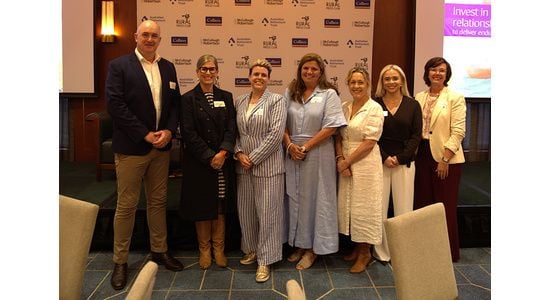
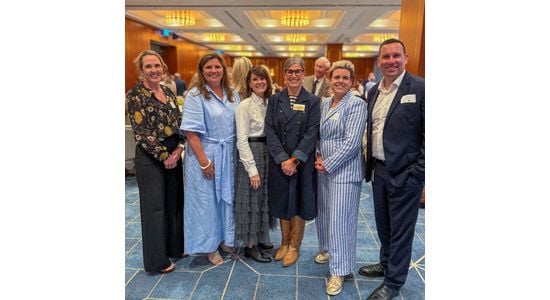
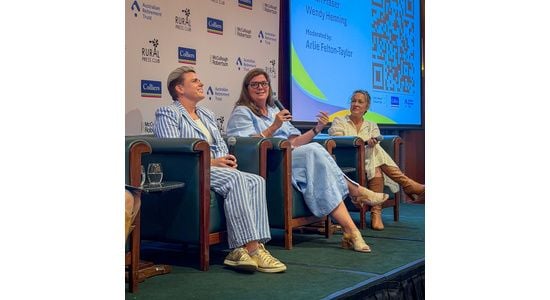
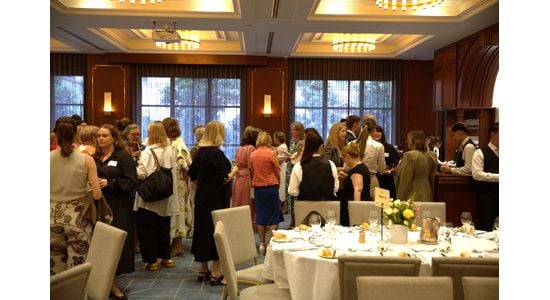
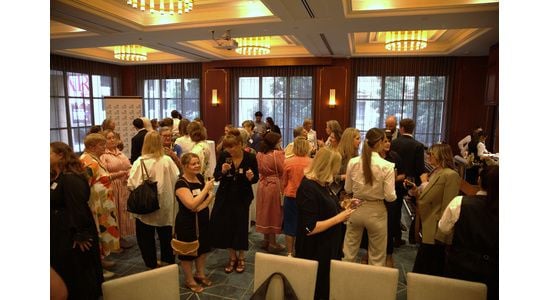
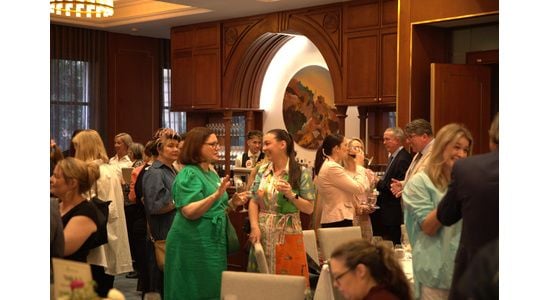
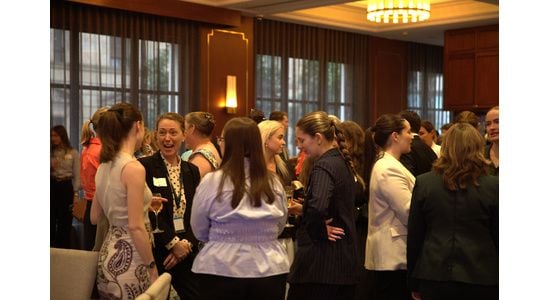
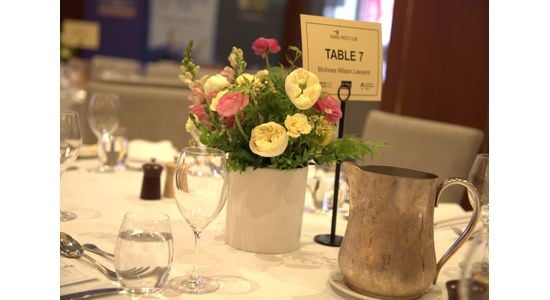
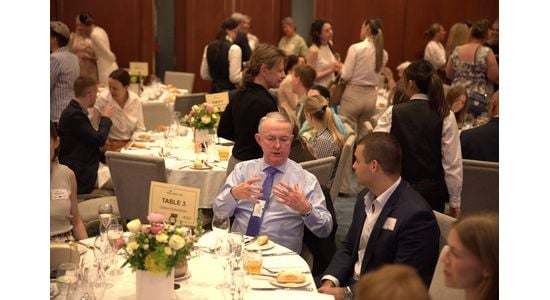
Tattersall Club was transformed for the RPC International Rural Women’s Day on October 15, which saw three panellists—Dr Helen Fraser, president of the Rural Doctors Association of Queensland, Rachel Chambers, Queensland Food Farmers Commissioner, and Wendy Henning, President of the Isolated Children’s Association for Queensland—interviewed by Arlie Felton-Taylor.
The panellists were asked both what shaped them, how they’re currently shaping rural Queensland, and what they hope for the future, and despite the differences in their professions each one answered that the biggest difficultly currently facing their industry the same way.
The Past
All three speakers credited the strong women that came before them in shaping their own leadership journey and said that while they might not have defined themselves as ‘leaders’ - in an era where the mentality was ‘get on with what needs to be done’ - they were non-the-less the inspiration for the panel’s achievements.
Dr Fraser said one piece of advice she still heads was given to her by her grandmother, who told her, “Don’t lament the opinions of people you wouldn’t take advice from.”
Ms Henning shared a similar story, crediting her mother instilling her with the drive to make change.
“[My mother said] if you have an opinion or something isn’t right... make the situation work for you,” she said.
Ms Chambers said early in her career she didn’t understand the importance of the past and described herself as a bull in a China shop, believing she was the first person on the committee to have an original thought.
“I [grew up thinking] women could do anything... it came as news to me that women were locked out of some things,” she said.
She said it took a trip to China, where she saw how the Chinese culture gave credit to their predecessors for her to understand the importance of what came before in inspiring what comes next.
The Present
Each panellist was asked what keeps them awake at night, and what gives them hope; all three responded that the same thing that they worry about or dread becomes what motivates them to continue to be a leader in their rural industry.
Dr Fraser said fear of being responsible for a gap in the healthcare system is what keeps her awake at night, but that she is proactive in turning her fear into a tangible solution.
Dr Fraser said embracing differences in perspectives and said it’s much easier to live with your decisions and subsequent mistakes when you know you’re doing the best you can to have all the right people giving you the right advice.
“Perfect isn’t possible... we need to strive for a sustainable [healthcare] system,” she said.
Ms Henning said the thought of families leaving rural and remote Queensland for education due to a lack of alternate options is what keeps her awake at night, but simultaneously what motivates her to get up in the morning.
Ms Henning said there are currently 12 shires in Queensland without a secondary school option, and while Distance Education bridges the gap it is unreliable in certain weather events and limits a student’s access to schooling beyond academics.
Despite this, Ms Henning said she remains optimistic and motivated to make a change and advocate for the individualised education of children in rural and remote communities.
“Today could be the day it’s a lightbulb moment for someone I’m talking to,” she said.
Ms Chambers said the fragility of food security is what worries her most, and the lack of acknowledgement or understanding of this fact from the majority of Australian’s troubles her.
“We are not food secure, we’re food privileged,” she said.
“90 per cent of Australian’s interact with food only through a supermarket.”
Ms Chambers said the lack of education around Australia’s food production is the weakest link in the food system - one that gives supermarkets all the power, as consumers are put in a position where they can’t make informed decisions on their food consumption outside of price.
The Future
Despite their concerns, each panellist described themselves as hopeful for the change they are bringing and hope to continue to do so.
“This is the era of impact... it’s a now or never time,” Ms Chambers said.
All three panellists said infrastructure is what they would focus on fixing with unlimited resource access and believe it could be the link to solving issues across the trifecta of health, education, and food security.
Dr Fraser said she believes new, or more specifically modern, infrastructure would attract healthcare workers and described many of the current facilities rural healthcare workers use as unsuitable for the modern healthcare being delivered.
“We’ve waited a long time [for upgrades to the rural healthcare system, and] we run a major risk if we keep putting it off until after the Olympics... if we keep pushing the issue down the line it is just becoming a more expensive investment,” she said.
“People are always going to live rurally, [and] I want to make sure rural people have the healthcare that we need.”
Ms Henning said that bridging the divide between the education infrastructure offered to students in metropolitan areas should be the priority, rather than offering alternative solutions, and described putting students into distance education as the “last resort.”
She said changing the perspective on what living and working rurally is like would be the first step in removing stigma associated with a rural lifestyle.
“We need to turn that conversation—there is so much advantage to [living, working, and being educated] rurally,” Ms Henning said.
“[We need recognition of] how vital but also vibrant rural and remote Queensland is.”
Thank you to our event sponsors, Australian Retirement Trust, Colliers Agribusiness AUS, McCullough Robertson.
Contact: Rural Press Club of Queensland reporter Milly Buck millster04@icloud.com
Milly Buck was awarded the 2026 Rural Press Club of Queensland scholarship to support her through her final year of studying Business and Communications at the Queensland University of Technology. As the Club’s inhouse reporter, Milly attends RPC events to report on news and speeches delivered this year. In July 2026 she was employed by the Queensland Country Life.
| Tags:Rural Press Club QLDEvent Recaps |